
THE STORY BUILDER
Cultivating conceptual thinkers and family cultures of shared learning and inquiry
WHAT
Entertaining story experiences shaped around the child’s developing cognitive identity that help families build a shared culture of learning and inquiry.
Story Builder develops conceptual thinking in young children through personalized narrative. We build stories sourced by and starring your child, facilitated by you, the parent, that develop how your child thinks about problems, patterns, relationships, and possibilities.
Story Builder is a guided storymaking system. It operates as a collaborative practice between parent, child, and our team of developmental storytellers, supported by purpose-built tools grounded in neurocognitive pedagogy and decades of classroom research.
Parents capture narrative material from everyday conversation through a structured prompting process. The system handles the developmental complexity. The child does not use screens directly (in Developmental Stage 3, families may choose limited, supervised child involvement, see WHO below).
The system maintains a coherent story template, a structured record of interests, developmental stage, and narrative preferences, that carries forward across stories. From this, the collaborative process produces a series of illustrated storybooks and guides to live off-screen and be revisited through reading rituals and family time. In each, the child appears as the protagonist, using their real qualities to navigate challenges.
Every page embeds four things: language meaning, number meaning, executive skills, and your child’s identity and voice.
Across stories, the child observes how assumptions, choices, and actions shape outcomes. Each story embeds research-based learning progressions for conceptual thinking in literacy, numeracy, and problem solving within the narrative through action and consequence. Learning occurs through example rather than instruction. Parents simply read and enjoy it with the child. The Reading Guide shows how to make use of the embedded learning opportunities naturally.
Over time, Story Builder produces more than individual books. It facilitates a repeatable and enjoyable family practice, a coherent story series, and a shared reference language for thinking and learning together.
WHY
Because children learn to make meaning through shared story
Every child forms an internal narrative about who they are, what the world is like, and how they fit into it. This develops whether adults engage with it or not. In early development it is shaped most through shared attention, repeated experience, and family life.
Children also need systematic, explicit instruction to learn literacy and numeracy, including how these systems work conceptually. Conceptual thinking means forming distinctions, noticing relationships, and reasoning about cause and consequence. This supports flexible problem solving and the ability to handle complexity.
Story Builder achieves this by drawing from a substantial proprietary library of research based, classroom proven learning progressions in literacy and numeracy.
Learning Progressions
A theory and model that shows us how to define the building block skills necessary for developing a domain, like language or math. From these we take the conceptual skills – awarenesses that facilitate more effective learning and retention – to create literacy and numeracy moments, learning opportunities, that can live inside a story without turning storytime into a lesson. The story shows the concept through action and consequence; the reading guide simply points it out so you can notice it together.
Schools provide instruction; families provide the cross-context practice that helps learning stabilize. Story Builder is designed to support that practice in daily life through shared reading and structured conversation.
Stories are a practical structure for this. When stories are created, revisited, and discussed, children practice tracking ideas across time, linking emotion with reasoning, and seeing themselves as active participants whose choices shape outcomes.
The near-term outcome is enjoyment and connection. The longer-term outcome is a stronger foundation for literacy, numeracy, conceptual reasoning, and a coherent sense of self.
WHO
For families who want to actively support their child’s development
Story Builder is designed to grow with the child and so is offered in three main developmental stages. The parent decides when to shift between these when ready. Each stage adjusts the story language, structure, roles, and guide style to be relevant and compelling.
Across all stages, the parent’s role is to listen, capture narrative material from real life, and use the reading guide to support conversation. The child’s role is to contribute ideas and respond through reading, discussion, and reflection.
Developmental Stage 1 — Parent reads to child
In Stage 1, typically preschool to early primary school, the parent reads the story aloud to the child. The language is written for a listening child with an adult present: richer phrasing, broader vocabulary, and concepts that are meant to be explored together. The Parent Reading Guide supports this by specifying where to pause, what to notice, and how to connect the story to daily life.
Developmental Stage 2 — Child reads to parent
In Stage 2, typically mid to late primary age, the child reads aloud to the parent. The roles shift: the child leads the reading and builds fluency with guidance. Story language adjusts to the child’s reading level and vocabulary so the text is navigable while still meaningful. Parent involvement remains active: scaffolding comprehension, sustaining motivation, and maintaining the shared family practice.
Developmental Stage 3 — Supervised independence
In Stage 3, typically secondary age, independence becomes a primary developmental goal. The child can take limited responsibility for story input, supervised by the parent. Stories adapt toward more complex plots and topics that reflect the child’s authentic interests. Themes align with the parent’s and community’s value structures. Developmental opportunities emphasize sense of self, responsibility, respect for self and others, and purposeful agency.
HOW
A three-step workflow for creating and sharing stories offline
Story Builder is designed to be quick. Parents spend a few minutes per story, so time stays with the child rather than the tool. The process works in three steps.
Set the Stage
Parents set the stage once. They answer a short set of guided prompts about their child: developmental milestones, personality, interests, emerging strengths, and preferred story worlds. They simply cover two kinds of information: who your child is, and what your child is practicing and learning. This raw material forms the basis of a master template so that each page of each book can provide learning opportunities in 4 areas in almost every page of every story.
Learning Opportunities
On almost every page, noted in the Reading Guide:
Conceptual Literacy — meaning in language: sound play, vocabulary in context, and comprehension moves.
Conceptual Numeracy — meaning in number: quantity, patterns, comparison, and early operations in context.
Executive Function Skill — age-aligned self-regulation skills that support wellbeing and cooperation (attention, planning, flexibility, working memory, inhibition).
Identity & Voice — the protagonist reflects your child’s emerging traits so they build confidence in their own style of thinking, choosing, and speaking. We call this developing self one’s cognitive identity.
Shape Each Story
To create each new story, parents spend a few minutes talking with their child. This usually happens through casual conversation or play. Parents elicit narrative elements from their child—drawn from fantasy or from everyday experience. Children respond naturally, in fragments or full ideas. Parents capture these responses in a brief prompt.
With the template in place, each round produces a new 10-spread adventure with cover. The process can be repeated endlessly, building a library of stories that grow alongside the child.
Receive & Ritualize
The family receives a complete storybook and a short Reading Guide. The story is read offline and can be revisited over time.
Conceptual thinking: what parents do
To take advantage of the learning opportunities that arise and are listed in the Reading Guide:
Pause at set moments in the story as you wish (varying on rereads).
Ask a question from the guide or your own that targets comprehension, story goals, options, cause-and-effect, and other patterns.
Listen to the child as they answer at their level. Then respond in your own words to extend the moment for shared learning (clarify, connect, or predict), as appropriate.
The same moves repeat across the series, with complexity increasing by developmental stage.
The same moves repeat across the series, with complexity increasing by developmental stage.
Story Builder supports shared reading and conversation; it is not designed to add tasks to already full days.
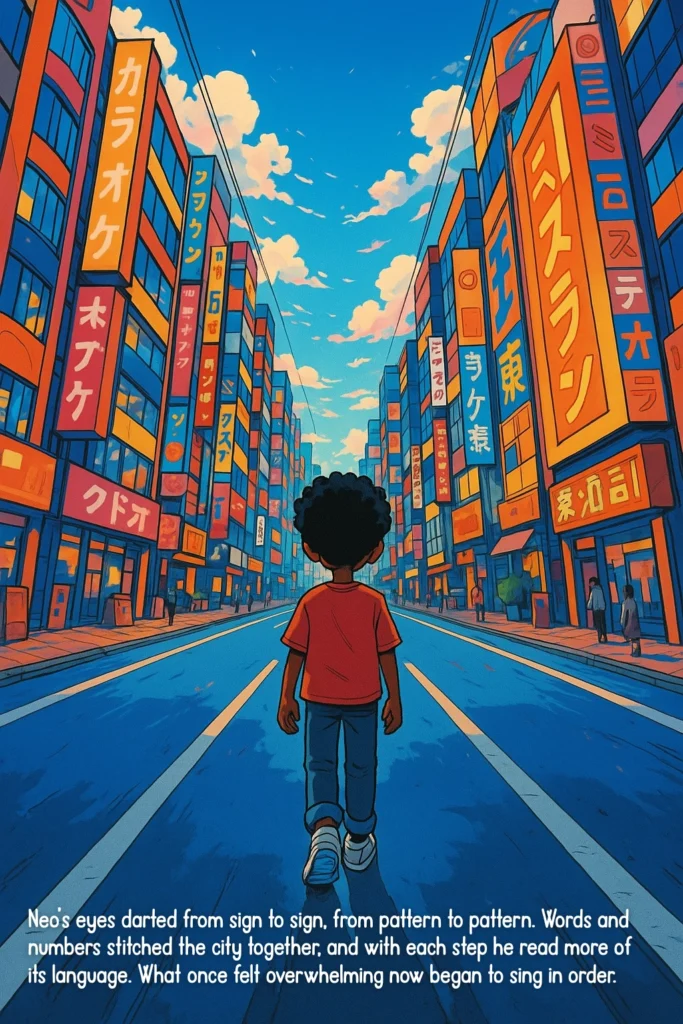
WHAT YOU RECEIVE
Print-ready storybooks and reading guides
Files included each time you create a story
- Home-print PDF (optimized for low ink)
- Professional-print PDF (print-service ready)
- High-resolution illustrations (no text)
- Reading guide (pause points + talk moves)
Storybook format
- Length: 11 pages, A4 landscape
- Structure: 1 cover page + 10 story pages
- Layout: each spread pairs one portrait-orientation illustration with the corresponding text
- Narrative arc: defined during the initial template-building stage
Printing options
- Home-print PDF: designed for immediate printing and reading.
- Professional-print PDF: designed for compiling multiple stories in the same series. When families have three or more stories, they can combine them through online printing services into full-color hardcover collections. Individual stories function as chapters; together they form a bound volume.
Illustration files
Illustrations are provided as high-resolution image files without text. Families can print them as artwork, use them to create a dedicated reading space, or revisit them independently of the story text.
Reading Guide
Each story includes a short guide that explains how to use the story as a repeatable practice. It indicates where to pause, what to notice for development and learning (learning opportunities), when to invite reflection or prediction, and when to let the story simply be enjoyed. It supports shared, repeated reading without prescribing it.
Over time
Stories, images, and guides accumulate into a growing library of shared references that reflect the child’s imagination and development. The output is not just content, but shared experience made tangible.
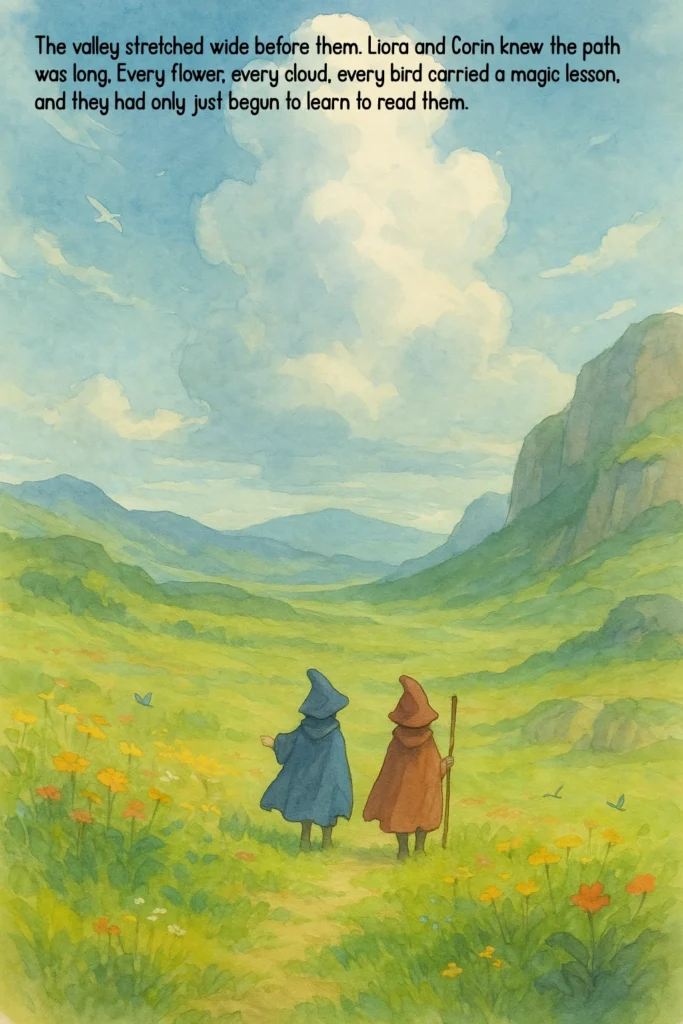
HOW IT GROWS OVER TIME
How stories develop alongside the child
Story Builder is intentionally series-based. Each book explores a safe story world shaped by the child’s interests, strengths, and way of thinking. While presented as a series, each stands alone, providing new opportunities for exploration and growth. What remains consistent is the child, their developing identity, interests, and opportunities to learn.
As the child develops, the stories adjust. Language becomes more precise, plots become more complex, and themes recur with variation. This helps children notice not only events in the narrative, but relationships between ideas across stories: how patterns repeat, shift, and resolve.
Repetition with variation is deliberate. It supports memory, strengthens identity, and builds confidence in thinking. Children practice navigating uncertainty, making choices, and learning from consequences across a familiar world rather than starting from zero each time.
Over time, the series becomes a shared reference point between parent and child: a stable space for imagination and conversation, sustained through continued reading and revisiting.

HOW CHILDREN & FAMILIES ARE PROTECTED
Our values and safeguards
Care, privacy, and restraint guide Story Builder’s design.
Data use and privacy
Story Builder collects only information needed to generate stories and guides. Personal profile information is protected, never shared with third parties, and never used for purposes outside story generation. Story Builder does not trade in behavioral data.
Information entered during story creation is kept as de-identified as possible and used only to produce the requested materials. Identifying information is collected only when legally required and is stored separately from story content.
Child depiction safeguard
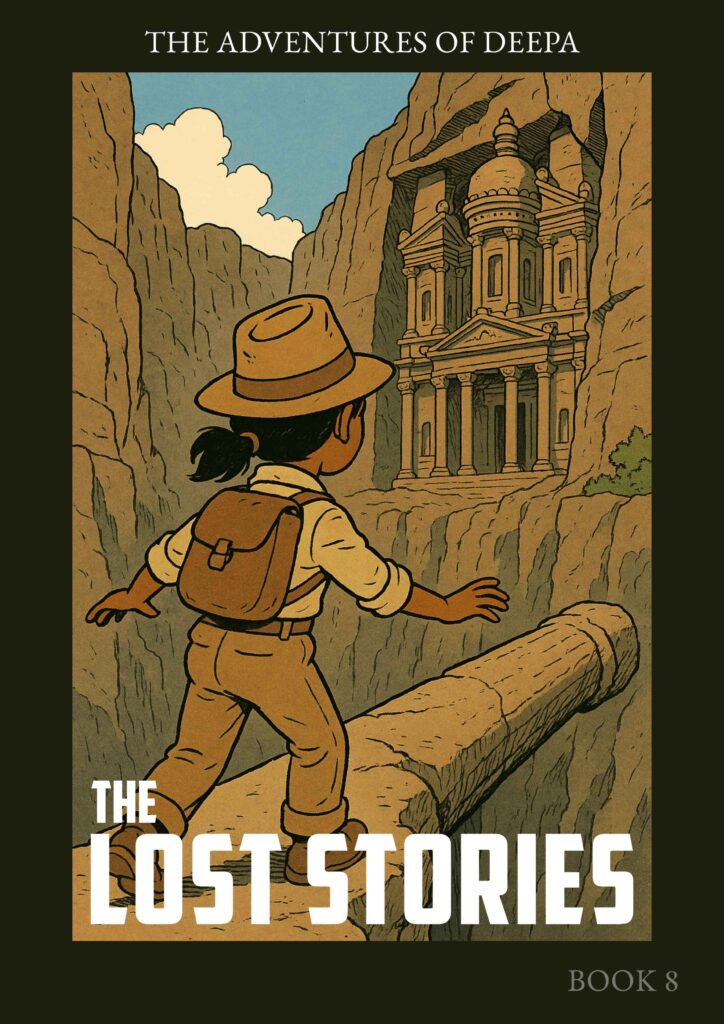
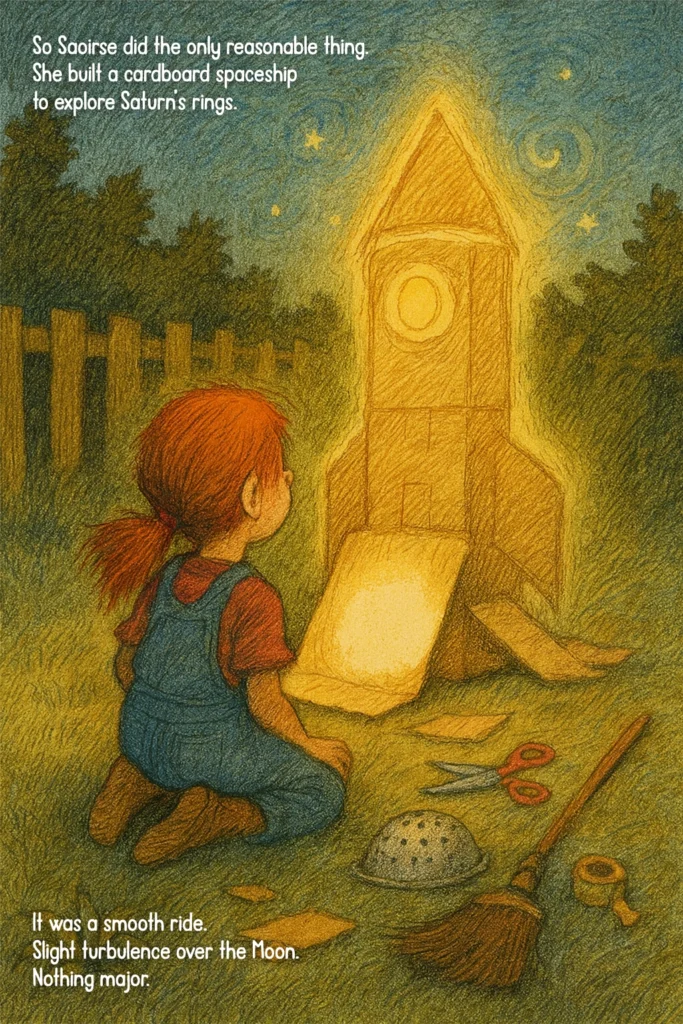
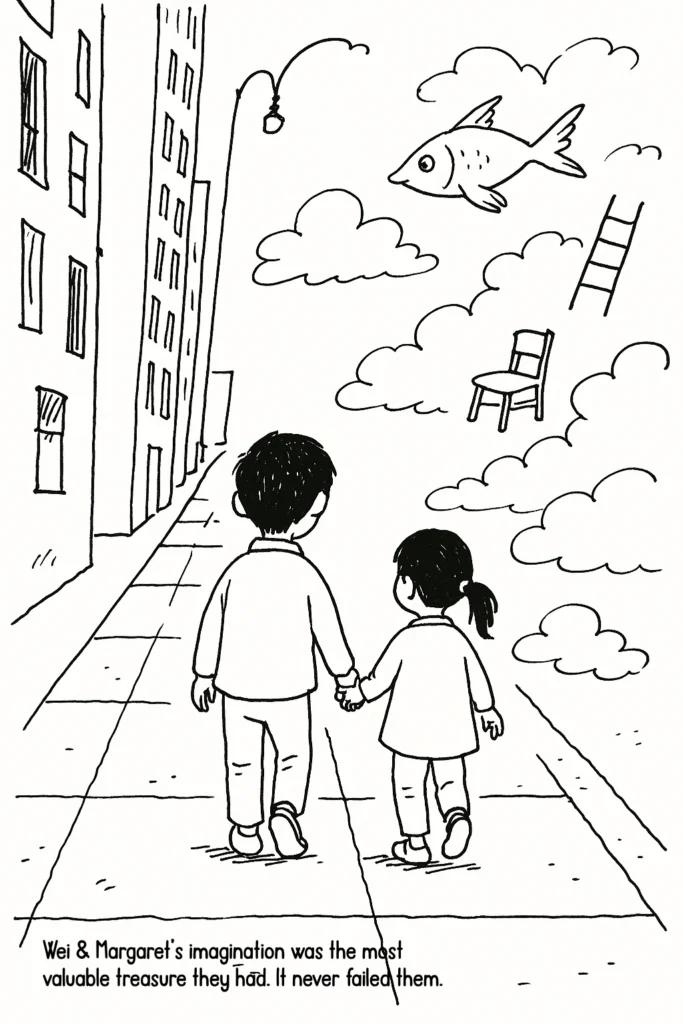
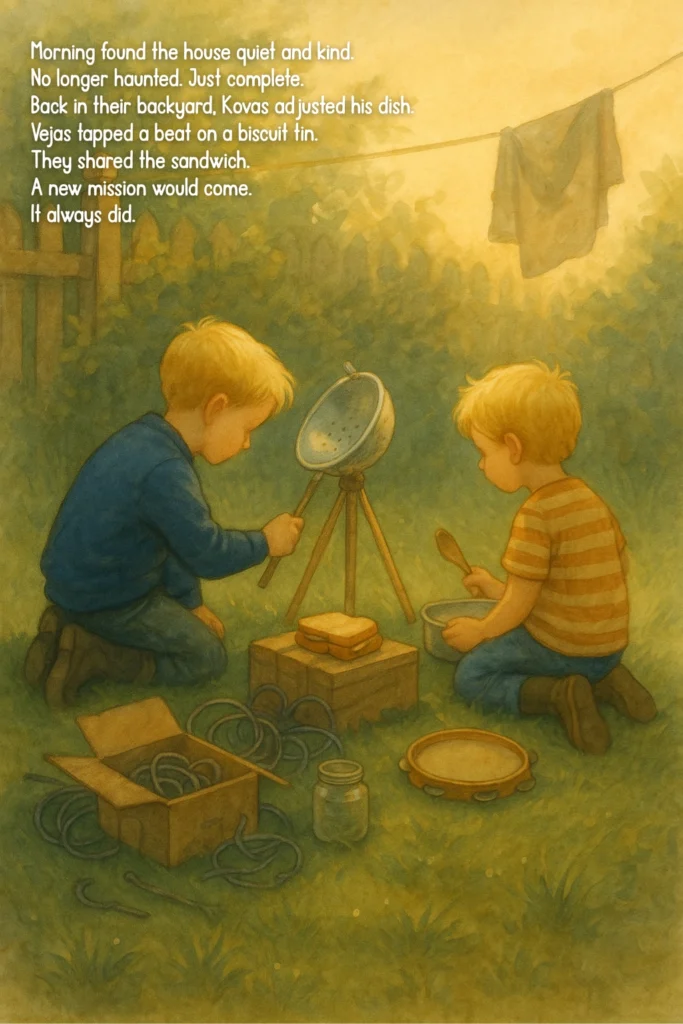
Children are never depicted facing the viewer. They are shown from behind within the world of the story. This protects privacy and places the child inside the narrative rather than on display.
Boundaries and accountability
Story Builder is built to support families, not to study them. Boundaries are intentional. Feedback from parents and caregivers is welcomed to maintain care, quality, and accountability.
Creative Rights Integrity
Illustration styles draw from broad traditions in children’s storytelling. Story Builder does not replicate the work or style of any individual artist, past or present. This is intended to respect creative practice and avoid imitation.
Research participation (optional)
Parents may be invited to participate in research activities. Participation is invitation-only and opt-in. Research does not use any existing Story Builder database (de-identified or otherwise) and is explained and agreed upon on a case-by-case basis.
WHAT NEXT
Presently, an invitation only, limited, collaborative service
Story Builder is currently offered as a collaborative service for a limited number of families (10-15 maximum). Each story is crafted individually through close work with parents. The process is methodical and personal while honoring parent time constraints. Parents engage with the system, not the system with the child.
Developmental Stage 1 only (early childhood to early primary; parent reads to child). Other developmental stages will be offered soon. Families with children in Stage 2 or 3 may express interest for upcoming availability.
How to express interest:
If this aligns with your family’s values and your child’s developmental stage, send a brief note to story builders @ artesian.life.
Include:
- Number of children (and ages)
- What drew you to Story Builder
- What you hope it might support in your child’s development
Each inquiry receives a personal response. If there is alignment and space is available, we will invite you to a short conversation to assess fit.