
Development & Learning
DEFINITION
Essays in this thread address Developmental Coherence Theory (DCT) and its applications — how people build coherent capacity over time through conceptual growth, iterative integration, and transfer across domains. This includes educational theory, pedagogy, language learning, assessment, adult development, and creative development. The common thread is the question of how humans develop toward coherence, not just how they function within it.
-

Beyond the Scorecard
Shared Terrain: Rethinking Assessment as Development
Assessment should help people understand how they learn, where they are strong, and what to do next. Too often it does none of that. It ranks, filters, and clears people without building awareness or supporting growth. Real assessment is developmental. It studies skill, context, and situation together so instruction can respond, learners can adjust, and growth can become more deliberate.
-

The Quantum Self: Developing Who We Are Through Situation
The Importance of Narrative, Situation, and Context in Development
Who you become depends heavily on situation, narrative, and context. The same person can stall in one setting and develop quickly in another. Good maps and skill progressions matter, but they are not enough. Development also depends on meaning, conditions, and the story you believe you are living. Change the situation well, and watch your capacities grow.
-

You Learned a Language Fluently Once, You Can Do It Again
We teach children fluency with research. We teach adults with empty rituals.
Your brain already learned one language fluently through a developmental sequence of interdependent skills. It can do that again. Yet most adult language instruction ignores how fluency actually develops and starts with abstraction, memorization, and grammar rules. We teach children to build mastery step by step using research. Then we hand adults empty rituals.
-
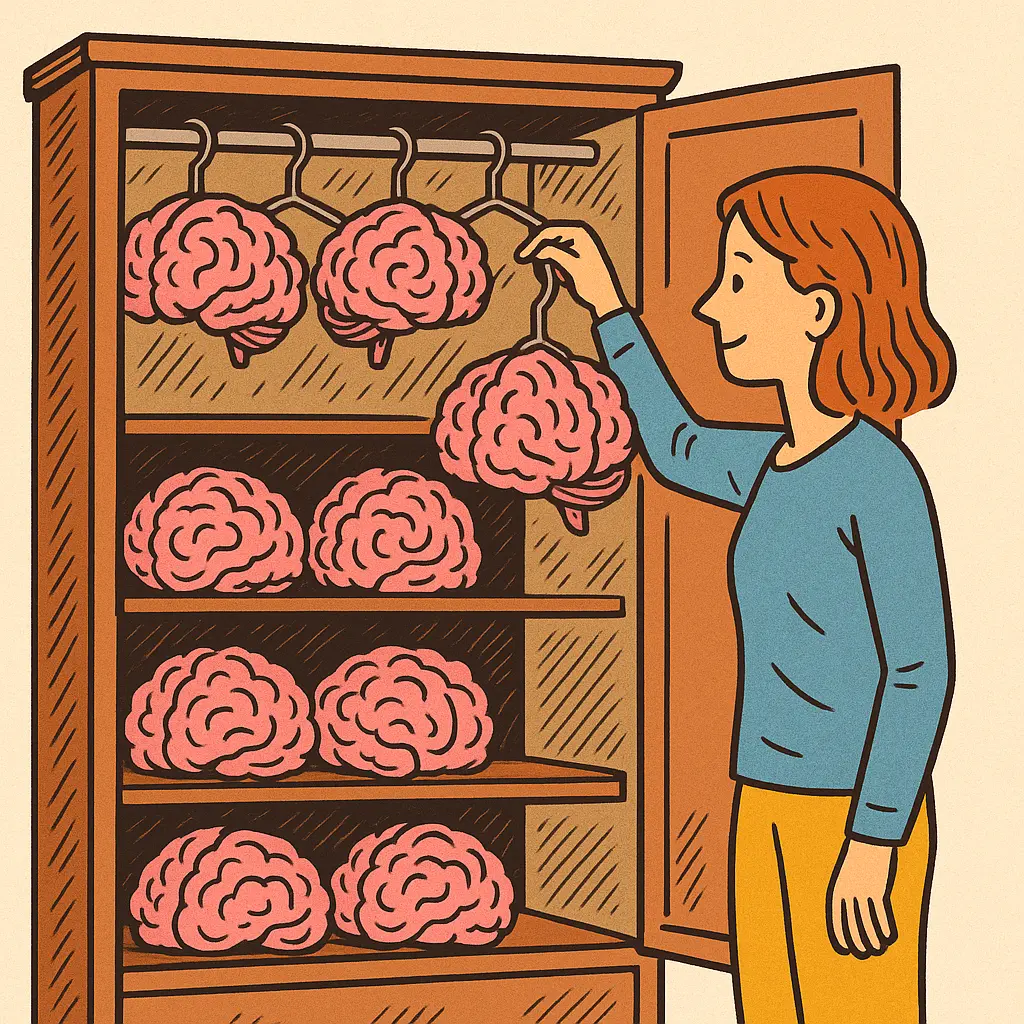
Do You Take Responsibility for Your Own Cognitive Identity and Development?
Your uniqueness is vital to your and your local community’s wellbeing.
Your real identity is your unique process of making meaning. It informs your personality, roles, and self-image. Taking responsibility for this cognitive development is key to life. Common identity assessments are limited, millions share the same results. Your cognitive patterns drive your purpose, growth, and quality of life. Are you actively shaping your mind or leaving it to others?
-

Losing Your Soul, Not Skynet
The Real Danger of LLMs
Students are not most at risk of cheating with AI. They are at risk of letting it replace the essential work through which voice, judgment, and conceptual thinking are formed. Used as a shortcut, AI produces competent emptiness. Used deliberately, it can scaffold growth. The real danger is not Skynet. It is surrendering authorship, and with it the development of…