
The Purpose Throughline
Growth is simple when purpose, workflow, and product form a coherent identity. I help projects refine and build that neurocognitive throughline, turning vision into traction.
Identity is always forming — it’s the brain’s default action, yours and your client’s, whether you participate or not. The brain’s core function is making meaning: it filters perception through emotion, organizes it into narrative, and positions the self within that story in order to act.
If leaders don’t engage consciously, identity still forms, but chaotically, leaving teams in mystery and confusion instead of clarity. When vision, team structure, workflow, and product align into an actionable identity, growth isn’t chaotic and sporadic but sustainable. When they don’t, every step is an uphill grind.
That’s why, despite the extraordinary potential of their product, I walked away from one of my most promising clients.
The First Clue
The validity of a project is always visible, even if we pretend not to notice. It’s a mystery only if you refuse to look at the evidence. You can sense when there is “no there there.” Teams sense it. Clients do too. Everyone needs the same cognitive throughline of meaning, otherwise, what’s obvious to one side feels incoherent to the other.
The absence of this essential shows up as warning signs. Ignore them if you like, distracted by potential, but eventually reality asserts itself, as it did for me and this client.
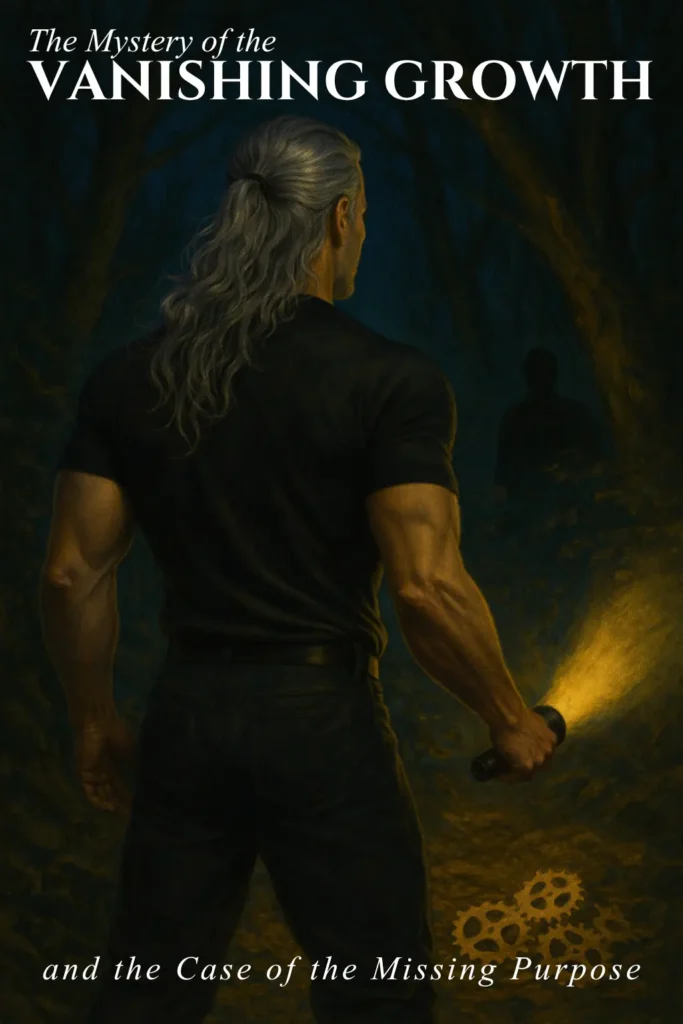
The Red Herring
The client, like many I’ve encountered, believed their only problem was sales. They treated everything else—the product’s market relevance, even internal alignment, a clear identity—as irrelevant distractions. But sales can’t compensate for a missing throughline. In this case, the missing work wasn’t hidden, it was sitting in plain sight, like the culprit in every second-rate mystery novel
When the fundamentals aren’t developed and aligned, every sale is a grind. Even the ones you manage to close demand endless handholding, because there’s no coherent identity, no ecosystem of support, nothing to carry the customer relationship forward. The effort required to keep each client quickly outweighs the value of winning them.
That’s exactly what happened here. Sporadic sales occurred, but loyalty vanished the moment the bespoke attention stopped. Growth itself seemed to vanish into thin air, the case of the missing purpose revealed in plain sight. Despite the promise of the product, it sat isolated—spare, unsupported, and unclear in its purpose. To potential clients, it never quite added up.
This is the danger: when purpose and identity aren’t defined intentionally, they’re defined by default. Confusion becomes the culture of the project. Then they aren’t owned by everyone and connected to action, so wasted energy becomes routine, and the organization slips into what I call executive dysfunction: an endless cycle of chasing meager sales and running in circles.

The Detective’s Mistake
Detectives (consultants) are meant to investigate, diagnose, and hand their findings to those responsible. My mistake was going further. I investigated thoroughly, collected substantial feedback from the market, and even mapped potential product pathways. While I reported the findings and suggested simple solutions, instead of workshopping these insights with the client, at their direction I built the solutions myself. What I created was compelling, but it was never theirs.
As usual, the solutions weren’t complicated. I built a comprehensive positioning framework: messaging, strategies, and proposed an entire ecosystem that supported deployment and adoption for all demographics, designed to simplify traction and foster loyalty.
But the problem was that I built it alone, not with the client, but for them. It was not my intention, but lack of internal traction and direction, lack of purpose, left me trying to fill holes by myself. At first I created examples of what could be done easily and quickly to develop product relevance and loyalty. But since emerging tech provides incredible support for those who know how to use it, I soon found myself rapidly developing extensive resources for effective engagement in hours that would have taken months.
One part stood out: an exhaustive, cognitively-enhanced communication library. It allowed the team to generate real-time responses, perfectly aligned with identity and strategy. I even mapped near-future product pathways. The potential was breathtaking. But none of it mattered, because instead of co-owning the framework, the client merely nodded along, approving in words but never acting in practice. They never accepted the missing pieces as a case to solve, and I had mistaken their lip-service for commitment.

The Reveal
While I could have stayed and milked the opportunity for more money, it would have been inauthentic. The real issues were ignored, so I couldn’t have provided any real value. The client and I never shared real goals or processes, and despite my attempts to bridge the divide, they were never truly interested in working together.
They went through the motions. They would say they wanted to move forward, even ask me for strategies to fill gaps or re-engage potential clients. I would prepare those strategies quickly, but nothing ever happened. We cycled through plans without follow-through.
I ignored my intuition—and my own eyes. I chose to be enchanted by the product’s possibilities rather than grounded in the lack of internal traction. When the follow-through never came, instead of seeing the inaction for what it was, I only increased my messaging, hoping that more clarity would spark movement. It never did.
That was my mistake. A detective doesn’t make everything right, they work to solve the case with the client. You cannot impose purpose, identity, or meaning on an organization. These things have to be co-owned. Without authentic ownership, even the best strategies won’t take root. Growth cannot really happen or survive in mystery. Anything built on shallow purpose and identity is weak at best, and quickly vanishes.
The Final Verdict
Walking away from the client wasn’t failure. It was the only honest ending.
Detectives know when the case is over. You can present the evidence, line up the suspects, and even point to the missing piece — but you can’t force anyone to see it or act on it. In this case, the client insisted the culprit was simply “a lack of sales,” unwilling to admit why the sales they did have vanished, or that the missing purpose was the real story all along.
For founders, leaders, and teams: the organizations that are taken seriously and achieve real results are the ones that treat structure, positioning, and workflow as essential as the product itself. They form the foundation of your executive function.
For myself: I saw the femme fatale client — all enchanting potential and thrilling opportunity — coming a mile away. The fatal flaw wasn’t the product; it was a leader who never spoke the throughline aloud, never owned it, and left identity to form by default. I should have known better than to compromise the value I bring for short-term gain or vague promises of future rewards. But I let the illusion pull me in. Like any detective, I’m still learning.
The hardest work in business is not chasing sales — it’s solving the real mystery: building the real, shared meaning that makes growth inevitable.