Jaak Panksepp argued that the experience of feeling is the fundamental affirming state of existence, replacing the Cartesian “I think, therefore I am” with “I feel, therefore I am”. This multifaceted process of feeling arises from a “Core-Self,” a primal agency located in the subcortical midline structures of the brain. This Core-Self provides a center of coherence, allowing the organism to experience itself as a singular, motivated entity.
I would argue they are both right and more, “I think and feel therefore I am.” These infrastructures and processes are coherent, make sense and develop together. They are interdependent and mutually sustaining. Any demarcation between them is academic, which is necessary but demands humility.
I predict and process reality in ever progressive and developmental iteration, interdependent with my society, therefore I am.
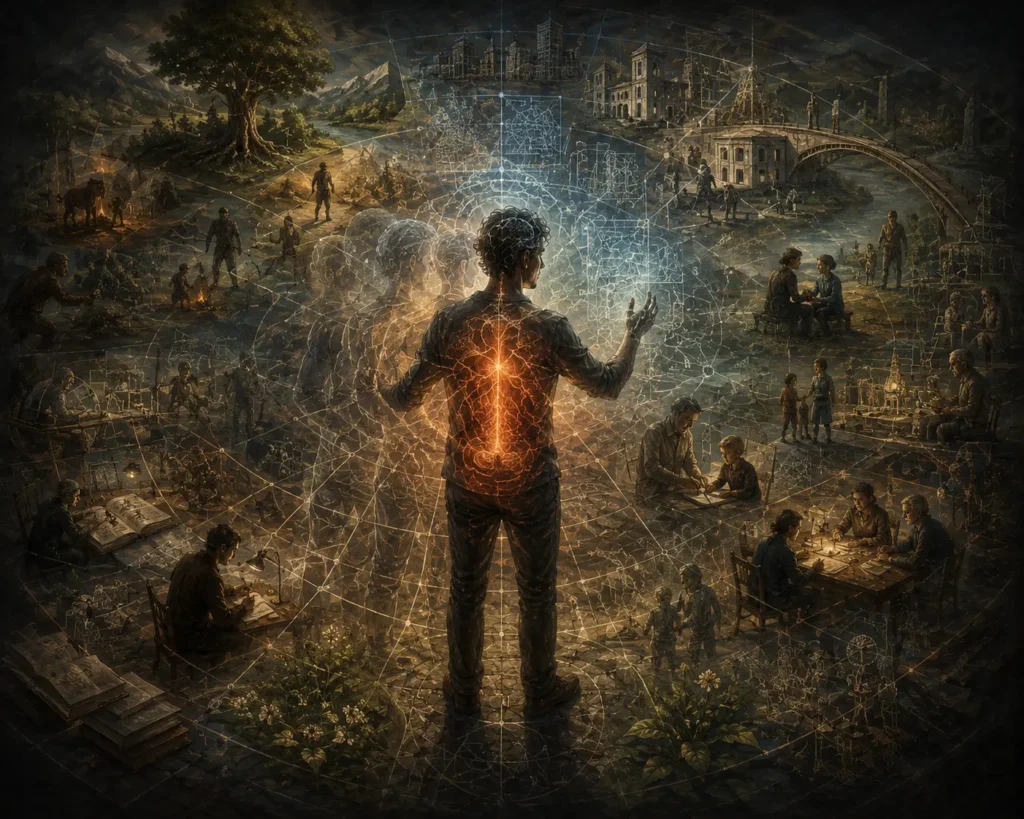
This dynamic existence provides a stable, living process that forms the actual self of each and every individual as a unique being. I call it Cognitive Identity, the Iterative Self, to summon higher-order cognition (predictive processing, problem solving, fascinations, competencies, and skills) into the mix of one’s biology (genes and physical existence) through time.