Communication technology and its culture have mutated into a strange and chaotic hurdle rather than a helpful tool for commercial exchange and human connection. Communication is essential for human wellbeing. In fact, communication with the least obvious purpose is the most valuable. It is the banter, the conversations about nothing, and above all, the time spent together that form our sense of self, our worth, and belonging among those we live with. This is most important for our core group, the partner, immediate family, and 2 or 3 friends that form the heart of our world. It is also important to other spheres of our larger community, but starts in the heart. This communication, both banter and being, is the measure of our presence in these lives and theirs in ours. Consistency of this simple communication in quantity (frequency) and quality (its nature and effect: fun, supportive, reliable, etc) is the source of trust in these relationships. When the communication consistency falters, the trust must somehow be rebuilt through more consistency. One would think that with so much communication technology it would not be a problem. But the opposite is true.
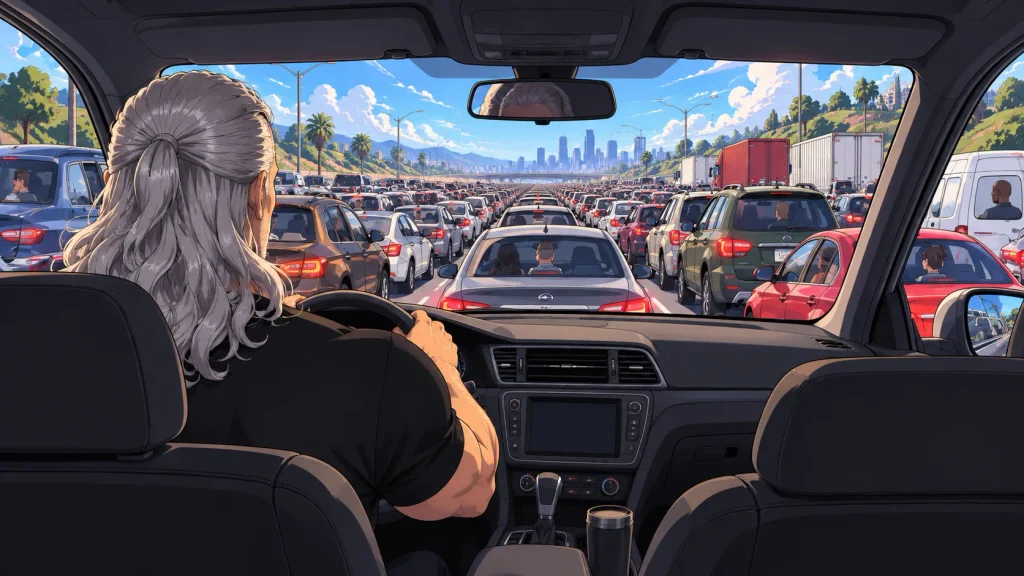
By communication technology I mean all the tools we use, the internet itself, mobile phones, and the platforms on both (social media, whatsapp, telegram, signal, gmail, etc). Because we have allowed a few conglomerates to take over the internet, and the “smart” phone has become a portal to that, our communication is forced into digital highways where all traffic must run together. Intimate chats, friendly banter, sales pitches, professional messages, dealings with your bank and utilities providers, contact from acquaintances, coordination with interest and community groups are all traveling down the same highway neck and neck. Because of its traffic, this highway is going nowhere fast. This is a problem for everyone. Humans need actual commerce, the authentic and fair exchange of value in the form of each person’s contribution to society. That exchange, like our connection to our loved ones, is part of the healthy function of our brain and affects our essential wellbeing. When authentic commercial exchange or personal connection is undermined we sense the instability and we feel stress. Consequently, we carry a daily baseline of anxiety similar to what you typically feel in highway traffic. By hoarding control of communication, the conglomerates that run the platforms, as well as the marketing interests promised access to a captured public, are undermining their own objectives. The need for control crushes the necessary complexity of human connection to one-size-fits-all channels that block, rather than support such connection. The very control and access that the digital highway provides to these interests has become increasingly less inviting to the people the highway was meant to serve. It is a tedious, necessary evil (if not just evil), rather than a helpful thoroughfare.
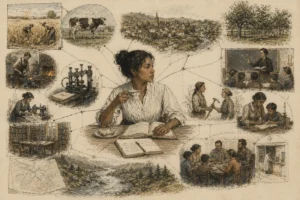
For each platform to get everyone on it to begin with, its initial proposition promised and for the most part delivered a new way of fulfilling our need for essential human connection. It offered an entirely new process and culture for it. These were sites of friendly banter whose main use was serving consistent connection, rather than any transaction. They were virtual forums where we could connect with friends and other spheres of our larger community, sometimes for important coordination, but mostly, and most importantly, for the banter. We used them as extensions of our actual life. The shift to a transactional platform for monetization was gradual (see Enshittification by Cory Doctorow). Rather than the nefarious scheme of a mastermind, the present situation was created by taking one blind, stumbling step after another. The platforms, their inherent uselessness, and the bloated conglomerates that provide real value to very few that have resulted are not designed to last or benefit humanity because they were not designed at all. It is not possible to stumble on a lasting and worthwhile proposition that actually brings real value to all involved. It requires a map because you need to know what you are looking for. The end result is one where everyone loses, including the ones who seem to be temporarily benefitting. Even if the bait and switch of how these platforms and their culture were created was deliberate, it is not relevant. Promising one thing and delivering another is not an effective business strategy. In every way, technology we depend on for communication is undermining trust essential to human culture, community, and wellbeing rather than supporting it.
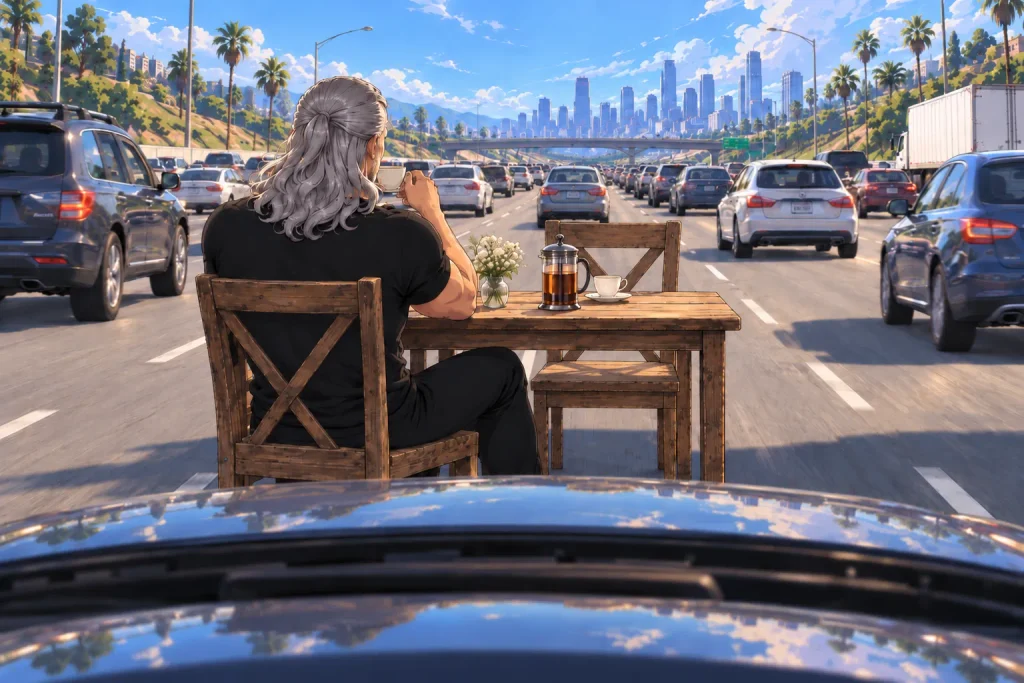
The gradual shift to channeling all communication to these platforms transformed each from an enjoyable tool for connecting to an obligation. A highway with heavy traffic is not something anyone would choose, because traffic is always exhausting. The banter that brought everyone to them in the first place has faded, as well as the connection they provided. Opening the app of these platforms is akin to taking an on-ramp into rush hour traffic, with the same results. You waste a lot of time and energy to get done whatever you got on there to do, more time and energy than you expected. We expect the connection with others to be seamless. The tools we use should not be the focus, like the table we sit around. So understandably, people are realizing these highways are no longer going towards any authentic human connection. They are not the forum of consistent connection, much less playful and enjoyable banter. So everyone gets on them less and less. Friends and acquaintances are ghosted simply because everyone is exhausted. Something as essential as communication for many aspects of our lives, including our commerce and wellbeing, should not be a drudgery. There should not be noise and friction here just so someone can make a buck.
The worst effect of these “tools” is the culture that has grown around and through them. At the beginning, we used them like they were extensions of our actual lives. A virtual conversation, even if anonymous, was not much different than an actual one. But over time, as we participated more and more with these tools, drawn by the promise of authentic human connection and opportunity for ourselves personally and professionally, the emphasis changed. In rather crucial ways, now actual life is an extension of the virtual one. Or it might be more accurate to say that digital culture, its methods and priorities of exchange, has more weight and effect on real, actual life, than the other way around. This would not be so bad if we were cyborgs. But we are not.
The shift from a pathway for essential human connection to a monetized highway of all communication has had other unhelpful effects. It has made the main method of communication, personal or professional, exhausting and a process that returns less reward than the effort it demands. Even when getting to where you want to go, driving in traffic is driving in traffic. Something that should be effortless, communication and human connection, is unnecessarily demanding. Part of what adds to the demand is the lack of actual communication that happens. Demanding that all communication happen in the same forum, in the same way, reduces the practice and substance of communication to its thinnest, weakest, and least rewarding form. It’s a bizarre virtual world where every conversation has to happen in a chaotic cacophony. There is no quiet place, only off and on. Trying to get a message through to other people like yourself who are distracted (and also possibly exhausted and operating with a baseline of low level anxiety) does not result in helpful human connection, much less effective communication.
As the traffic increased on these virtual highways, the initial promise decreased, but we kept trying to make it work. We adjusted our communication to soundbites and newsfeeds. Who has the time for depth or peace in traffic? But we also tried to bridge the gap by presenting our most attractive selves, or some version that could attract. As the forums that we had begun to rely on for human connection transformed into highways, so did the overall demand for each person’s attention. We naturally adjusted. However, this shift was not just in traffic or reach, it was that the initial promise distinctly shifted and expanded from consistently connecting with your community, wherever they are, virtual or actual, to connecting to many more imaginary others. This expansion played on our need for connection, promising us even more of the good stuff: belonging, opportunity, and affirmation. But this new version of the promise is one that will never deliver because it sells out quality for quantity. The consequence is a particularly superficial online life with superficial connections, if any. The superficiality is enforced by both the thinness of communication, the soundbites, as well as the need to present an attractive version of ourselves. Performance is fine. Life afterall is drag. But real human connection thrives on consistent, real engagement. All of you needs to be present, not just a superficial cutout.
With the emphasis shifting so that this online culture informs offline life, our capacity for human connection has diminished. Our ability to connect adjusted to that online promise and process. We fully adopted the superficiality of what we say and how we present ourselves, damaging our overall human connection on and offline. Soundbites and cardboard cutouts are not helpful for the kind of connection we need in virtual life and absolutely meaningless in real life.
We’ve ended up in a momentary limbo where the only tools ready to hand do not serve us at all, and at the same time we have let our abilities, reliable methods, and offline culture of connecting with each other suffer. Regardless, people return to these platforms and engage less and less, only when they have to, as the reward is meager. It makes no sense to get on a highway that just sticks you in traffic but doesn’t get you where you need to go. So we’ve stopped opening the app to connect with friends in banter as that is not one of the routes the platform serves anymore. As we wake up to the fact that the initial promise and function of what has become this virtual highway and its lifestyle does not serve us anymore (nor do the conglomerates that own them), the more we will move on to practices and processes that do.
In actual reality, in an actual city, in actual traffic, where everyone has to have a car, highways make more sense as wasteful as the whole agreement is. In a virtual reality, they make no sense. The terrain is wide open and the laws of physics do not apply. If our technology served us rather than the other way around, there would be community spaces online. Instead, we have let a few companies buy up all the imaginary landscape and then tell us how it has to be used. The tech they provide limits our choices to their highways and laws of driving. We are stuck in traffic, exhausting ourselves and wasting our time, but worst of all freely giving away our own wellbeing in exchange for little to nothing. Our cognitive abilities are diminished because we are continuing to participate in a virtual system that strip-mines human beings for quick gain. Our imagination and innovation suffer as well, two tools we need for our liberation as well as our wellbeing. We are stuck in an unnecessary, virtual traffic jam, just so others can make money off of us, when we could be riding flying carpets, brooms, or horses, with our friends.